

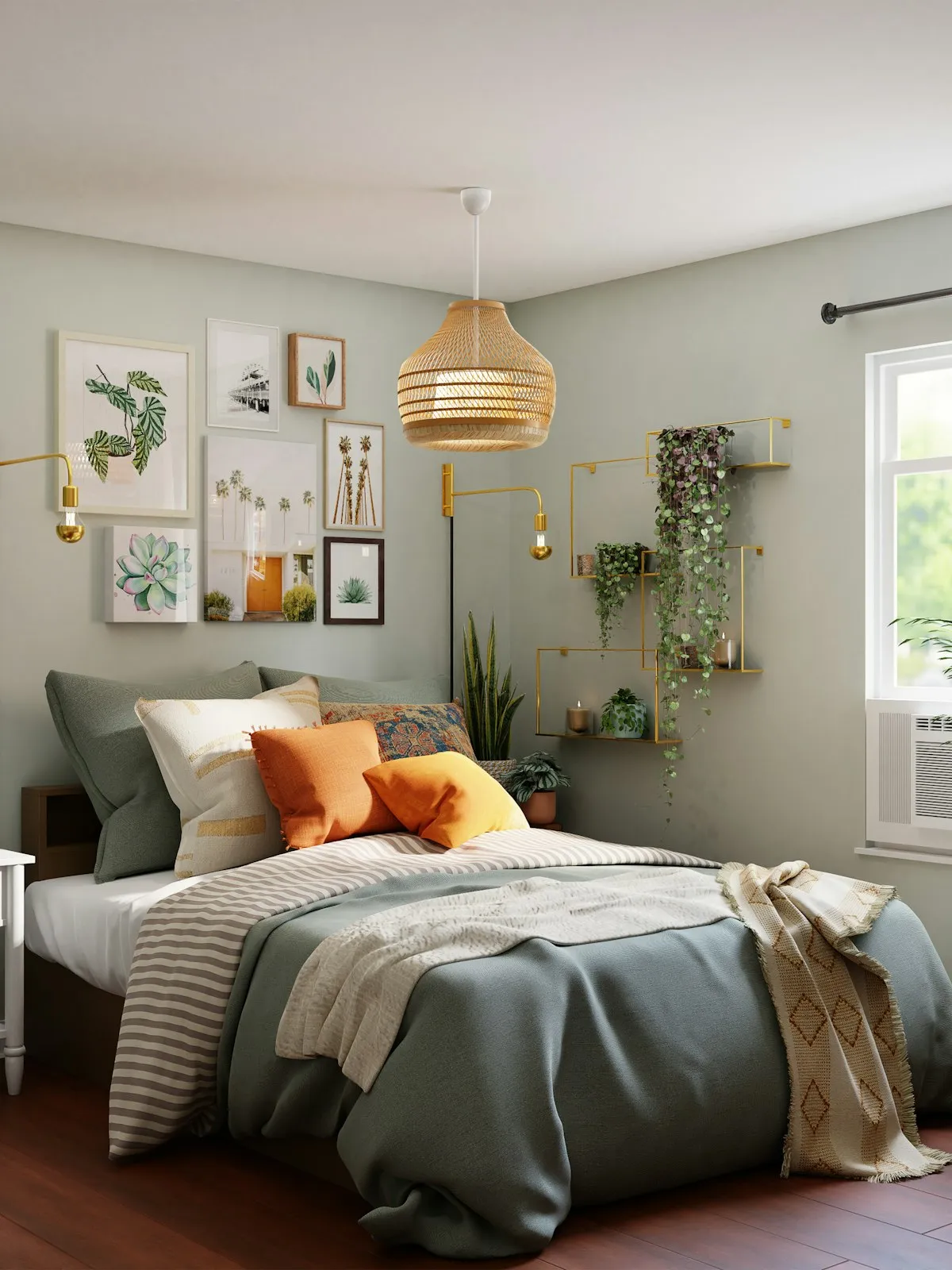

A room can feel tired long before anything is actually wrong with it. The couch is fine, the paint is fine, the rug is fine. It just feels like the same view you have walked past for months. The good news: you do not need to buy furniture or repaint anything to fix that. You change a few small things on purpose, and let the season do the rest.
The Swap Mindset
Here is the shift that saves the most money: stop thinking about redecorating and start thinking about swapping. Furniture is the expensive, permanent layer. Textiles and accents are the cheap, movable layer. Refresh only the movable layer and you get a whole new mood for a fraction of the cost.
- Leave the big pieces alone. Sofa, bed frame, dining table, shelving. They stay.
- Change the small stuff that touches your eye first: pillows, throws, what sits on the table, what hangs at the window.
- Aim for a feeling, not a full theme. You want the room to whisper “it’s fall now,” not shout it.
The Easy Swaps
These are the workhorses. Master them and you can reset a room in an afternoon.
- Pillow covers. Buy covers, not whole new pillows. You keep the same inserts and just slide on a new look, so storage is flat and cheap.
- A throw blanket. Draped over a chair arm or the foot of the bed, it changes the color story instantly.
- A table runner or a new centerpiece. A dining or console table is prime real estate. One runner shifts the whole room’s tone.
- Curtains by season. Light, sheer panels let summer air and light through. Heavier, denser panels make a winter room feel snug and hold in warmth.
- Bedding weight. A crisp lightweight cover in summer, a heavier duvet or an added quilt in winter. Your body notices, and so does the room.
You do not need all of these at once; even two move the needle.
Texture and Color by Season
Season is really a language of texture and temperature, and your eye reads it before your brain does.
- Spring and summer: light linen and cotton, smooth and breezy fabrics, cool and pale tones. Think soft greens, watery blues, sand, and crisp white.
- Fall and winter: chunky knits, velvet, wool, layered throws, deeper and warmer tones. Think rust, ochre, forest, plum, and warm gray.
You are not repainting. You stack cozier, heavier textures as it gets cold and strip back to airy ones as it warms up. Same room, different weight.
Natural Touches, Light, and Scent
The cheapest seasonal decor is the kind you gather. Nature is already changing on schedule, so borrow from it.
- Spring: a few branches or budding stems in a jar, fresh cut flowers, potted herbs.
- Summer: bright blooms, lemons or fruit in a bowl, a bundle of wildflowers.
- Fall: gourds and mini pumpkins, dried grasses, colored leaves, a bowl of apples.
- Winter: pinecones, evergreen clippings, bare branches, a few citrus studded with cloves.
Whatever your area gives away for free or nearly free is exactly right, and it grounds the room in the actual season outside your window, which no store bought prop can fake.
Two more senses people forget, and both are cheap to shift:
- Lighting. In summer, lean on natural light and keep it airy. In darker months, add warmth low in the room: a small lamp, warm white bulbs, candles in the evening. Low, warm light reads as cozy.
- Scent. Bright and clean in warm months (citrus, cut grass, linen). Warm and spiced in cold months (cinnamon, clove, cedar, vanilla). A single candle or a simmer pot resets a whole room for very little.
Store, Rotate, and Do Not Overdo It
The system is what keeps this cheap year after year, because you reuse instead of rebuy.
- Keep a labeled bin per season. When you swap, the outgoing pieces go straight into their bin and into a closet. Next year they come back like new for nothing.
- Keep a neutral base. If your sofa, walls, rug, and big furniture stay neutral, almost any seasonal accent works with them. That is what makes swaps cheap: you never have to match a bold permanent color.
- Do not overdo the theme. A few cues beat a full costume. If every surface screams the season, it looks like a store display, not a home. Pick a few spots and stop.
Refreshing a room is not about buying more. It is about rotating a small, smart set through a neutral canvas, in step with the season, so every future swap is nearly free.
Frequently asked questions
How do I decorate for the seasons on a budget?
Change only the small, movable layer: pillow covers, a throw, a table runner, curtains, and bedding weight. Add free natural touches like branches or pinecones, and store off-season pieces in labeled bins so you reuse them instead of rebuying. Keep the big furniture neutral so everything works together.
How often should I swap decor?
Two to four times a year is plenty, roughly with the seasons. If that feels like a lot, a spring-to-summer and a fall-to-winter switch covers the two biggest mood shifts of the year.
What is the single cheapest swap that makes the biggest difference?
Pillow covers. You keep the inserts and only buy the covers, so they are inexpensive, easy to change, and flat to store. They also sit at eye level, so a small change reads as a big one.
Do I need to match everything perfectly?
No. Pick two or three accent tones for the season and repeat them a few times around the room. A neutral base does the heavy lifting, so your accents only need to agree with each other, not with a bold sofa or wall color.
House Home Decors may earn a commission from purchases made through our links, at no extra cost to you.